Why Your Moisturizer Suddenly Burns (and 4 Other Signs Your Skin Barrier Is Damaged)

Your face is stinging right now, isn’t it? Or maybe it feels tight and shiny at the same time, looks red and irritated, or has erupted in tiny rough bumps that weren’t there last week — even though you haven’t changed a single product.
If the routine you’ve trusted for months has suddenly turned against you, you’re not imagining it, and you’re almost certainly not “allergic” to everything you own. What you’re experiencing is one of the most common — and most misunderstood — problems in modern skincare: a compromised skin barrier.
The “Aha” Moment: Five Symptoms, One Cause
Here’s the part most people miss. Burning, oily-but-flaky skin, post-wash tightness, sudden sensitivity, and mystery bumps look like five separate problems. They’re usually the same one: your skin’s outermost protective layer — the stratum corneum — has been worn down and can no longer hold water in or keep irritants out.
Think of that layer like a brick wall. The skin cells are the bricks, and the lipids (ceramides, fatty acids, cholesterol) are the mortar holding them together. Overusing strong exfoliating acids, retinoids, harsh foaming cleansers, or simply a sudden shift in weather can strip that mortar away. The wall develops microscopic cracks — and every symptom below follows from those cracks.
Why Does My Regular Moisturizer Suddenly Burn My Face?
When your barrier is intact, a gentle moisturiser feels like nothing at all. When it’s cracked, the same harmless product can sting on contact. Those microscopic gaps expose the nerve endings and living cells underneath, so even water, glycerin, or a mild cream can register as a burning or tingling sensation.
What to do first: stop all strong actives immediately — no acids (glycolic, salicylic, lactic), no retinol, no vitamin C, no physical scrubs. This isn’t the time to “push through” the irritation. Pare your routine back to a gentle cleanse and a simple, soothing moisturiser until the stinging stops.
The Oily Yet Flaky Paradox: Why Your Skin Is Tight and Shiny
One of the most confusing signs is skin that is somehow oily but peeling at the same time — shiny in the T-zone, yet flaking when you apply makeup. This is the difference between dry and dehydrated skin:
- Dry skin lacks oil (a skin type).
- Dehydrated skin lacks water (a temporary condition almost anyone can develop).
When the barrier is leaking water, your skin panics and over-produces sebum to try to seal the surface. The result: an oily shine sitting on top of dehydrated, flaking cells. The fix isn’t to strip the oil away — that makes the panic worse — but to restore water and lipids so the skin stops overcompensating.
Does Your Face Feel “Squeaky Clean” or Physically Stretched?
That tight, stretched feeling after washing — the one some brands sell as “squeaky clean” — is not a sign your cleanser is working. It’s a sign it has stripped away your protective lipids. Hot water and harsh, high-foam surfactants are the usual culprits.
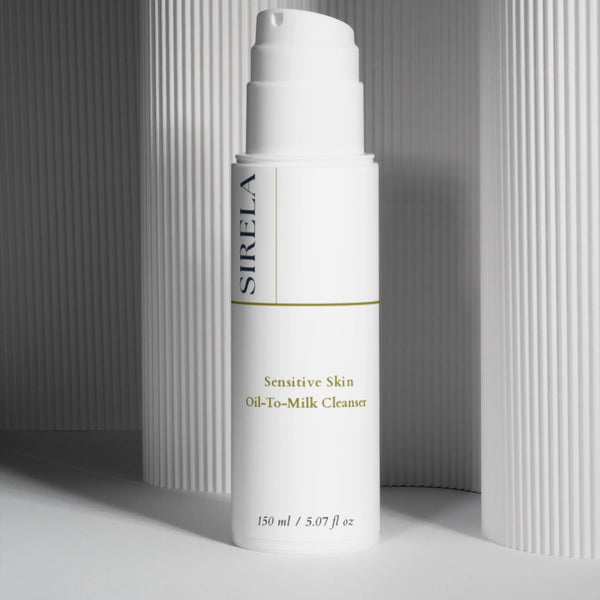
The goal is lipid preservation: cleansing that lifts away makeup, sunscreen and grime without dissolving the mortar in your barrier. A gentle, lipid-replenishing format like an oil-to-milk cleanser rinses clean while leaving skin comfortable rather than stretched. Rinse with lukewarm — never hot — water.
Developed a Sudden “Allergy” to Your Routine? Here’s What’s Really Happening
Waking up red, reactive, and convinced you’ve become allergic to products you’ve used for years is alarming — but reassuring news: you very likely haven’t developed a permanent allergy. When your barrier is down, your skin simply has no buffer, so ingredients that were always there suddenly provoke a reaction. Your guard shield is temporarily lowered, not gone for good.
Most barriers recover within a few weeks of gentle care. During that window, simplify ruthlessly: fragrance-free, active-free, and focused entirely on calming and rebuilding. If redness, swelling, weeping, or pain is severe or doesn’t settle, see a dermatologist — a genuine allergy or skin condition should be ruled out by a professional.
When Acne Treatments Make Your Breakouts Worse: Spotting “Mock Acne”
Tiny rough bumps all over the face, skin that feels like sandpaper, a sudden breakout out of nowhere — it’s tempting to reach for the heavy artillery. Don’t. These small, uniform bumps are often “mock acne”: a barrier-stress reaction, not a true infected breakout.
Hitting them with strong salicylic acid or benzoyl peroxide treats a problem you don’t have and damages the barrier further, which can make the bumps spread. The smarter move is to calm and rebuild with anti-inflammatory, soothing ingredients, then reintroduce any actives slowly once the skin is comfortable again.
How to Rebuild a Damaged Skin Barrier (Without More Stinging)
Recovery is less about adding more and more about choosing gentle, intelligent ingredients that re-lay the mortar in your wall. These are the building blocks to look for.
Find your symptom below — your fix is on the right.


Bio-Retinol Alternatives (Bakuchiol)
If you still want cell turnover and anti-ageing benefits but your skin can’t tolerate traditional retinol right now, bakuchiol is the gentle, plant-derived alternative. It supports smoother, firmer-looking skin without the peeling, redness, and barrier-stripping risk that often comes with retinol. Our Bio-Retinol Bakuchiol Oil Serum pairs bakuchiol with supporting peptides so you can keep your renewal routine going while the barrier heals.
Peptides
Peptides are the cellular messengers that signal your skin to synthesise new proteins like collagen, helping it rebuild structural resilience from within. They’re well tolerated by stressed skin, which makes them ideal during recovery. A targeted Firming Peptide Serum reinforces firmness and bounce without provoking the irritation that harsher actives cause.
Emollients & Humectants (Squalane, Glycerin, Hyaluronic Acid)
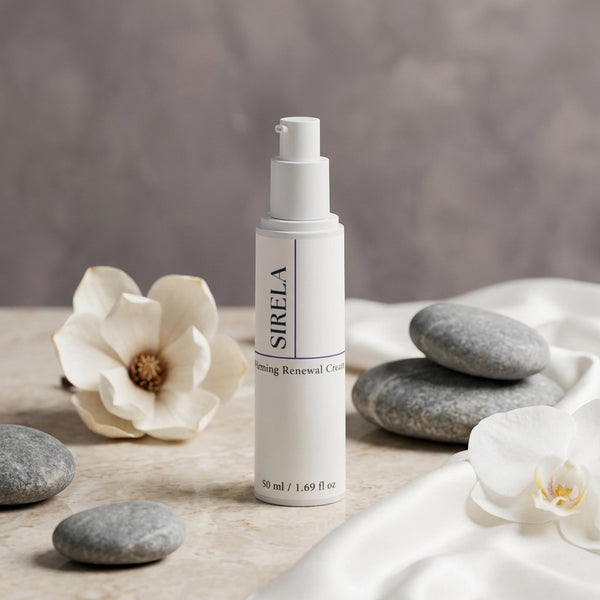
This is the part that brings fast relief. Humectants (such as glycerin and hyaluronic acid) pull water into the skin, while emollients (such as squalane) are bio-mimetic lipids that smooth into the microscopic cracks and help seal the surface — calming the burning and tightness as the barrier rebuilds. A soothing, replenishing cream like our Firming Renewal Cream layers comfort and hydration back onto compromised skin.
Your Simple Barrier-Repair Routine
Keep it minimal while you heal:
- Cleanse gently with lukewarm water and a lipid-preserving cleanser.
- Hydrate with humectants while skin is still slightly damp.
- Seal with an emollient-rich moisturiser to lock everything in.
- Pause all strong actives until the stinging, tightness, and bumps have fully settled — then reintroduce one at a time, slowly.

This article is for general educational purposes and isn’t a substitute for professional medical advice. If your symptoms are severe, painful, or persistent, please consult a dermatologist.