
Can You Use Too Much Niacinamide? The Saturation Trap Nobody Warns You About

Share
You overhauled your routine, every product on the shelf is labelled “gentle” and “soothing,” and yet here you are at 1 a.m., tilting your face toward the bathroom light to inspect a fresh crop of tiny, textured bumps. If you’ve been quietly typing niacinamide breaking me out suddenly into Google, you’re not imagining things — and you’re definitely not the only one.
Niacinamide gets sold as the friendliest active on the market: the one ingredient that supposedly agrees with everyone. So when your skin pushes back, it feels almost personal. But those little niacinamide irritation bumps usually aren’t a sign that something is wrong with you. More often, they’re a sign your routine is carrying too much of a good thing.
Niacinamide purging vs breakout: why this one’s different
Let’s settle the question everyone asks first: is this purging? With retinoids or exfoliating acids, a short “purge” can genuinely make sense — those ingredients speed up your skin’s natural shedding cycle and bring congestion to the surface faster. Niacinamide doesn’t work that way. It isn’t an exfoliant, and it doesn’t accelerate cell turnover, so there’s no real niacinamide purging vs breakout phase to wait out.
That distinction matters because “just push through it” is the worst advice you can take here. If a niacinamide-heavy routine is irritating your skin, three more weeks won’t rescue it. What you’re seeing is far more likely to be irritation — or a reaction to something else stacked into the same routine — than anything your skin needs to wait out.
How niacinamide quietly took over your whole shelf
Here’s the part nobody flags. Ten years ago, niacinamide lived in a single bottle — a dedicated serum you chose on purpose. Today it’s everywhere. It’s increasingly common to find it tucked into your cleanser, your toner, your essence, your moisturiser and your SPF, often all at the same time.
That’s the real story behind what I’d call cumulative cosmetic saturation. No single product looks unreasonable on its own. But layer five or six of them, and you’ve created uncontrolled chemical layering — your skin fielding the same active from every direction, with no one keeping track of the total. The result is a slow niacinamide percentage overload that builds over weeks until your barrier finally raises a hand.
10% niacinamide vs 2%: more isn’t better
This is where the industry’s quiet “percentage arms race” comes in. Somewhere along the way, a bigger number on the label started to be read as a better product, and formulas crept upward to keep up.
The evidence doesn’t really reward that race. The lower end of the range — roughly 2–5% — is where niacinamide has its most established track record for supporting a comfortable, healthy-looking barrier. Pushing far past that tends to bring diminishing returns and, for skin that’s already sensitive or stressed, a higher chance of irritation. So the 10% niacinamide vs 2% question isn’t really about which is “stronger.” It’s about whether your skin is getting one sensible, well-judged dose — or absorbing high levels from every layer at once until it tips into skin barrier disruption from actives.
The fix: a simple active ingredient overload reset
If any of this is hitting close to home, the answer isn’t another corrective product. It’s subtraction. Think of it as a short skincare routine for active ingredient overload:
- Pare back for two to three weeks. A gentle cleanser, one moisturiser, and daytime SPF. That’s it.
- Actually read your labels. You may be surprised how many of your “supporting” products are quietly carrying the very same active.
- Let your barrier settle before reintroducing anything — and when you do, add one product at a time so you can tell what your skin genuinely responds to.
- Favour multi-taskers over single-active bottles, so you’re not slowly rebuilding the same overloaded shelf all over again.
The minimalist fix: fewer products, working harder
This is exactly the thinking SIRELA was built around. The cure for a disrupted skin cycle isn’t a tenth bottle — it’s a return to a skinimalism routine for glowing skin, where every step has to earn its place.
That’s what high-performance minimalist skincare should actually mean. Instead of chasing raw percentages, the aim is intelligent formulation synergy: a few carefully chosen products designed to work with each other rather than compete.
Our Firming Peptide Serum is built for precisely this kind of pared-back routine. Rather than hammering your skin with one blunt, high-dose active, it’s formulated as a genuinely multifunctional serum for anti-aging — balanced, barrier-friendly support paired with biomimetic peptides chosen to support the look of firmness and density over time. It’s the single, considered step that can stand in for three overlapping ones: the exact opposite of the saturation trap.
So if your shelf has quietly turned into a percentage arms race, take this as your permission to scale it back. Fewer, smarter products — and skin that finally gets room to breathe.
 Shop Now
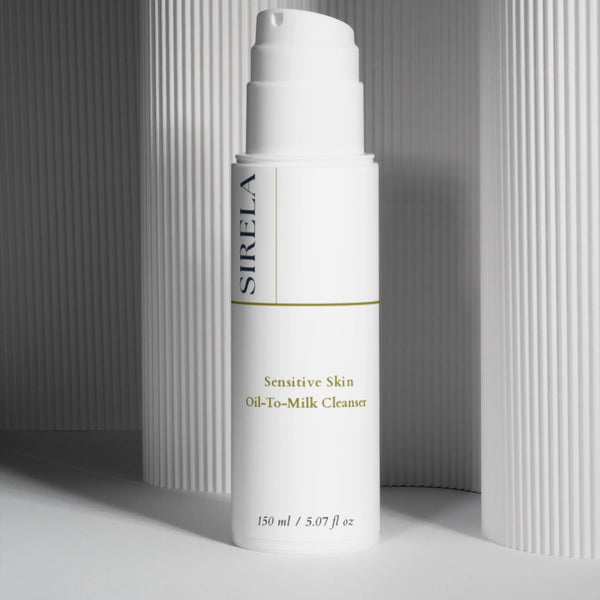
Sensitive Skin Oil-To-Milk Cleanser
340.00 kr Shop Now
Firming Peptide Face Serum for Mature Skin
864.00 kr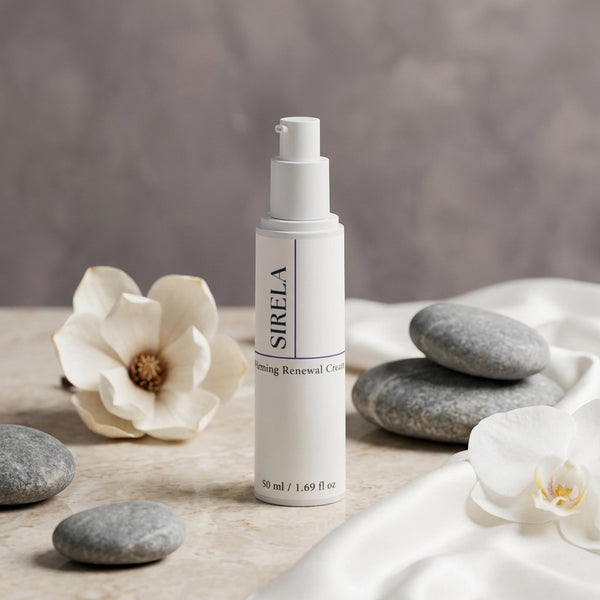 Shop Now
Firming Renewal Cream
767.00 kr